Roblox Just Raised Its Age Gate to 18+—And the Community Is Still Holding Its Breath
I still remember the first time I stumbled into a Roblox experience that made my stomach drop—not from horror, but from the slow-motion realization that the platform’s guardrails were more like decorative ribbons than actual barriers. Now, in 2026, Roblox has finally nudged that barrier a little higher: the age threshold for Restricted content has officially moved from 17+ to 18+. The news landed in the developer forums like a pebble dropped into a crowded pond, sending ripples of relief, confusion, and renewed skepticism across every corner of the community.
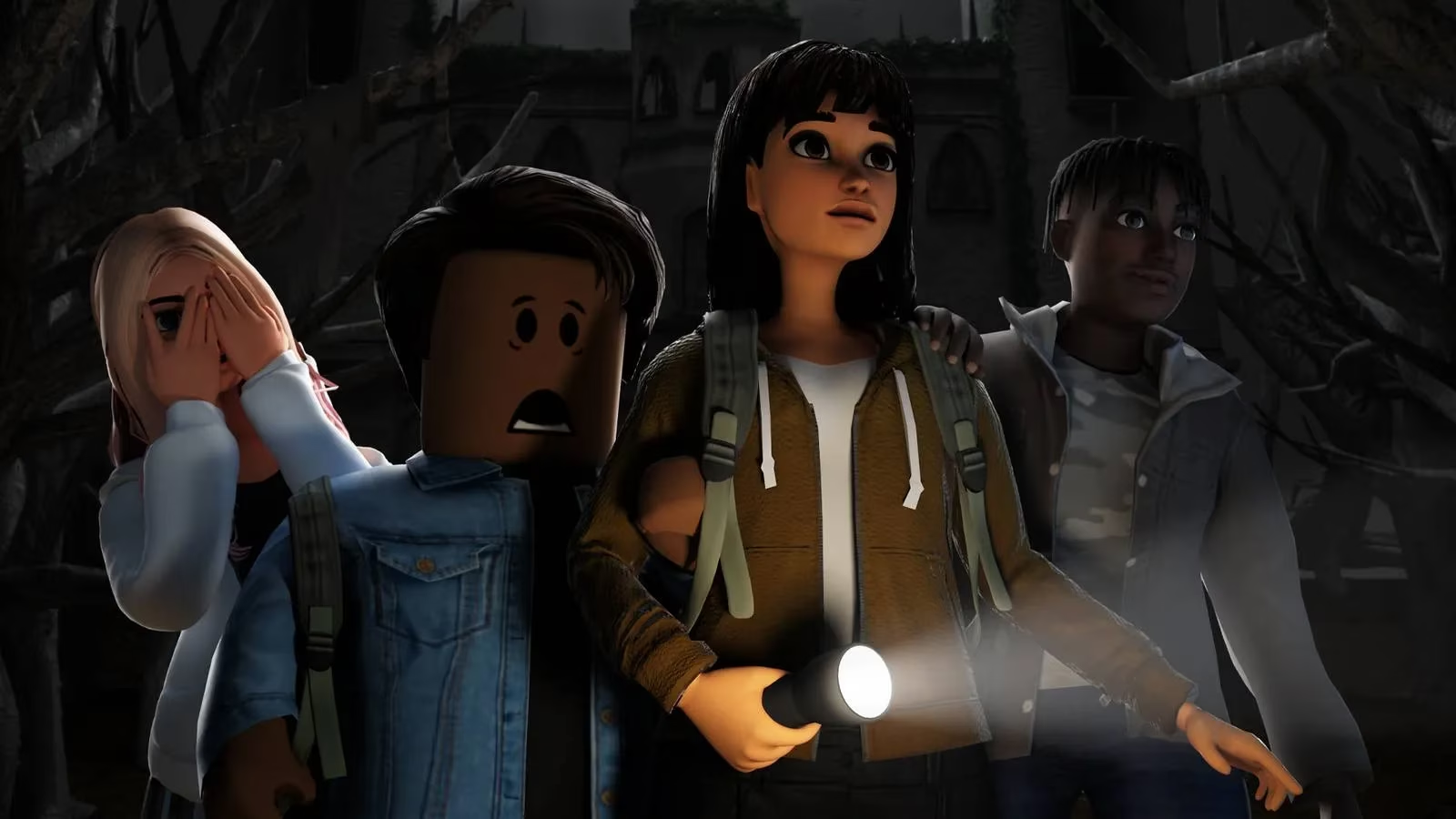
Navigating Roblox’s safety evolution feels like watching a novice tightrope walker inch across a wire with no net—every step forward is genuinely impressive, but the drop beneath remains terrifyingly deep. The Restricted label, originally conceived as a container for mature themes like graphic violence or horror-adjacent atmospheres, was never meant to be a backdoor for prohibited content. Let me be crystal clear: even with the age bump, sexual content is still completely banned, a line the company redraws with every policy update like someone furiously retracing a chalk outline in the rain. Yet the decision to scrub all Restricted-tagged experiences from the search results and recommendations of anyone under 18 happened almost overnight—a silent, algorithmic purge that left many younger players refreshing their home pages in confusion.
What fascinates me most is how this affects the creators. Any developer currently under 18 who built a Restricted experience can still access their own work—a grandfather clause that feels almost tender, like leaving a nightlight on in a room you’ve outgrown. But from this point onward, the door is slammed shut: you cannot launch a new Restricted game unless you’ve crossed that 18-year-old Rubicon. For a platform built on youthful creativity, that’s a tectonic shift. I’ve watched coding prodigies as young as 14 craft horror mazes that rival triple-A titles, only to hit a wall that now reads “come back in four years.” The energy in the developer Discord servers shifted from collaboration to a kind of collective grieving—not just for lost projects, but for the intangible trust that Roblox itself was a place where age was just a number if your code was clean.
Age verification itself has become a quiet battlefield. Roblox leans heavily on government-issued IDs, a method that slices through ambiguity like a scalpel but introduces its own privacy wounds. The promise of “facial age estimation,” still looming on the horizon as a future feature, feels like a half-built bridge—who will trust a platform already entangled in data collection nightmares to scan their face without flinching? I’ve spoken with countless friends who refuse to upload a driver’s license to a game platform, and I can’t blame them. It’s the digital equivalent of handing a bouncer your passport at a candy shop—technically logical, emotionally dissonant.
But here’s the darker undercurrent I can’t ignore. The Restricted tweak arrives in the shadow of a much uglier storm—child predation concerns, the Louisiana Attorney General’s lawsuit, and Roblox’s controversial crackdown on so-called “vigilantes” who tried to expose predators themselves. Watching the company ban creators like Schlep while outwardly championing child safety felt like watching a lifeguard fire the person screaming “shark” because it ruined the beach atmosphere. The community still hasn’t healed from that whiplash, and no amount of age gate polishing can erase the taste of that irony.
I don’t want to sound entirely cynical. Raising the Restricted bar to 18+ is a meaningful, measurable step—like finally replacing a rusty lock on a door that’s been swinging open for years. It acknowledges that the old threshold was a soggy piece of cardboard. And I believe the employees writing these forum posts genuinely want to build a safer space. But child safety on a platform of 70 million daily active users isn’t a lock-and-key problem; it’s more like holding water in your cupped hands. You can tighten your grip, adjust your posture, but the water will always find a way to seep through the gaps. Real safety requires infrastructure, moderation that works at scale, and a cultural overhaul that refuses to treat young users as walking engagement metrics.
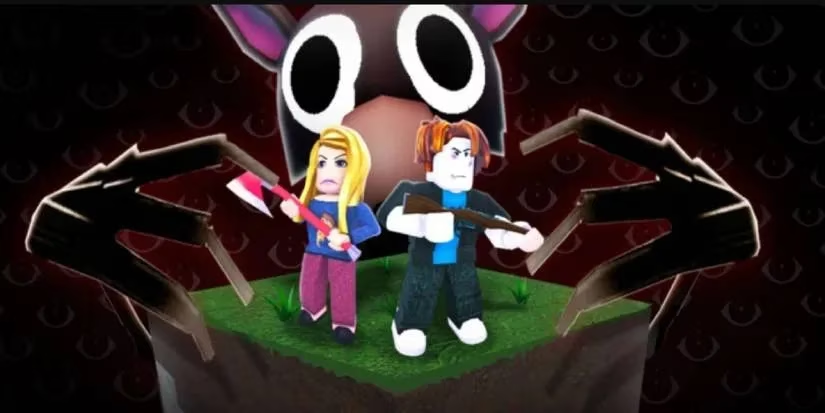
As I navigate Roblox in 2026, I click into experiences now gated behind an explicit “18+” badge and feel a strange mixture of comfort and unease. The haunted houses are still there, the psychological thrillers, the moody exploration games like 99 Nights in the Forest—all cordoned off with a velvet rope that at least exists. But the rope is figurative, the enforcement is imperfect, and the predators who exploit this platform don’t care about age thresholds. They care about trust, and trust remains the most fragile thing Roblox has left to protect.
I’ll keep building, and I’ll keep playing. But I’ll also keep watching that tightrope walker, hoping the next step doesn’t come with a fall.
According to coverage from Polygon, age-gating and platform moderation changes often function less like a hard wall and more like a signal to users, parents, and regulators about where a company is drawing its responsibility lines. Framed against Roblox’s shift of Restricted experiences to 18+, the bigger takeaway is how discovery controls (search and recommendations) can meaningfully reduce accidental exposure while still leaving determined users—and bad actors—room to maneuver, making enforcement quality and trust-and-safety capacity just as critical as the headline age threshold.
Comments